
Orbi AX4200 (3-pack)
View on Amazon ↗Why it works
Strong backhaul, High performance
Best for
larger homes, higher throughput
This guide is a practical starting point for covering 3,500 sq ft. We'll focus on stable coverage first, then speed.
Sizing notes
Rule of thumb for 3,500 sq ft: start with 3 to 4 total units (router + nodes), then adjust after a walk test.
Best fit: two-story homes, long layouts, and mixed wall materials.
Why this matters at 3,500 sq ft: At this size, the backhaul link between nodes becomes the limiting factor more often than Wi‑Fi version.
Common starting layouts:
Next step: run a Wi‑Fi walk test. If nodes are inconsistent, skip to wired backhaul for mesh.
Square footage is a decent starting point, but layout and wall material matter more than people expect. Two homes with the same sq ft can need very different setups if one is open-plan and the other is long, narrow, or dense-walled.
Practical rule: optimize for where you use Wi‑Fi (office, bedrooms, living room), not for the corners you never occupy. Mesh is about consistency: you’re building a chain of strong links, not one big transmitter.
Start by placing the main node where it can ‘see’ the most of the home. Then place the next node where signal is still strong (one or two rooms away). After you’re stable, you can chase speed. If you chase speed first, you’ll end up moving nodes blindly.
If you have concrete/plaster walls, a long house, or a detached space, wired backhaul (Ethernet or MoCA) is usually the cheapest way to make the whole system ‘just work.’
As an Amazon Associate I earn from qualifying purchases.
| Pick | Why it works | Best for |
|---|---|---|
| Orbi AX4200 (3-pack) Amazon ↗ | Strong backhaul, High performance | larger homes, higher throughput |
| eero Pro 6E (3-pack) Amazon ↗ | High performance, Good for many devices | larger homes, busy households |
| ZenWiFi XT8 (2-pack) Amazon ↗ | Strong performance, More power-user controls | tinkerers, fast connections |
Why it works
Strong backhaul, High performance
Best for
larger homes, higher throughput
Why it works
High performance, Good for many devices
Best for
larger homes, busy households
Why it works
Strong performance, More power-user controls
Best for
tinkerers, fast connections
Even one wired run to the worst dead zone can beat buying more nodes.

Amazon Basics RJ45 Cat-6 Ethernet Patch Internet Cable, 1Gbps Transfer Speed, Gold-Plated Connectors, 50 Foot, for PC…
Best for: wired mesh nodes, workstations

TP-Link 8 Port Gigabit Ethernet Network Switch - Ethernet Splitter | Plug & Play | Fanless | Sturdy Metal w/ Shielded…
Best for: wired backhaul, home office, multiple devices
For larger homes / dense walls: MoCA often beats adding a 4th node.

goCoax MoCA 2.5 Adapter (2-Pack) with 2.5GbE Ethernet Port | MA2500D Ethernet Over Coax for Gaming & 4K Streaming | 2…
Best for: a verified coax LAN path needing two endpoints
Skip this if: Working Ethernet or existing compatible MoCA already meets the need, or the coax carries satellite/unknown shared or ISP service. Map the path before buying; do not buy two new adapters when only one peer is missing.
Check before buying: Needs at least two compatible MoCA peers on a connected 1125–1675 MHz path. Count a compatible built-in LAN MoCA peer before ordering; verify active ISP spectrum and splitters. Not for active satellite coax.
AI-assisted manufacturer-document review, not hands-on testing.
goCoax MA2500D, 2.5GbE port, two-adapter pack. Verify pack quantity and included power supplies in the selected listing.
Retailer reported in stock (2026-09-13). Availability checks are not editorial approval.

Filter, MoCA POE for Cable TV & OTA coaxial Networks ONLY
Best for: MoCA installs
Best for: MoCA installs

GE RG6 Coaxial Cable, 25 ft. F-Type Connectors, Quad Shielded Coax Cable, 3 GHz Digital, In-Wall Rated, Ideal for TV…
Best for: MoCA installs, coax cleanup
Next: What is MoCA? · MoCA starter bundle · MoCA troubleshooting · MoCA adapters (quick picks)

NETGEAR Orbi Whole Home Tri-Band Mesh WiFi 6 System (RBK753) – Router with 2 Satellite Extenders | Coverage up to 7,5…
Best for: larger homes, higher throughput
Watch outs:
Amazon eero Pro 6E mesh wifi system - Supports internet plans up to 2.5 Gbps, Coverage up to 6,000 sq. ft., Connect 1…
Best for: larger homes, busy households
Watch outs:
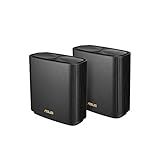
ASUS ZenWiFi AX Whole-Home Tri-Band Mesh WiFi 6 System (XT8) - 2 Pack, Coverage up to 5,500 sq.ft or 6+Rooms, 6.6Gbps…
Best for: tinkerers, fast connections
Watch outs:
Most homes do fine with 2–3 nodes. If walls are dense or the layout is long, plan on 3 and prioritize wired backhaul.
Wi‑Fi 6/6E can help newer devices, but placement and backhaul matter more than spec-sheet speed.
No. Too many nodes can increase interference and reduce throughput. Add nodes to fix dead zones, not to chase peak speed.
As central as possible and elevated. Avoid corners, metal racks, and behind TVs.
Wired backhaul (Ethernet/MoCA) + better node placement.
Next steps